Marble Countertop Etching in Martinez: How to Remove Dull Spots and Restore the Shine
You wipe the counter, the light hits just right, and there it is: a cloudy, dull spot that won’t “clean off.” If you’re in Martinez and your marble countertop suddenly looks worn in one area, you’re probably dealing with etching, not dirt.
Etch marks can show up fast. A lemon wedge, a splash of vinegar, even some bathroom products can leave marble looking faded in minutes. The good news is that most etching is fixable. The key is knowing what caused it and choosing the right fix, because marble etch removal isn’t the same thing as stain removal.
If you want the shine back without ending up with a patchy “spot-repair” look, Pro Floor Savers can help through Marble Restoration & Repair.
Why marble gets dull spots (and why it’s not the same as a stain)
Marble looks tough, but it’s chemically sensitive. Most marble is primarily calcium carbonate. Acids react with calcium carbonate, which means the stone surface can partially dissolve at a microscopic level. That tiny change alters the surface texture — and the polished shine disappears. What you see is a dull spot, a light ring, or a cloudy patch.
That’s why etches often show up around sinks, coffee stations, and food prep areas. Common culprits include:
-
Citrus (lemons, limes, oranges)
-
Vinegar and many “natural” cleaners
-
Wine, soda, and sports drinks
-
Tomato sauce
-
Some bathroom products (especially on vanity tops)
Here’s what trips people up: an etch is damage, not discoloration. A stain is pigment or oil that has soaked into pores. An etch is a change to the stone’s surface finish.
Quick “etch vs stain” test
-
If the mark looks lighter or cloudy and feels a bit rough or “draggy,” it’s likely an etch
-
If the mark looks darker (like a shadow) and the surface still feels smooth, it’s more likely a stain
-
If you can feel a line with your fingernail, it may be a scratch (different repair path)
One more myth worth clearing up: sealer does not prevent etching. Sealers help slow staining by reducing absorption. They don’t stop acid from reacting with marble.
What to do right now (before you make it worse)
When a dull spot appears, it’s tempting to scrub harder. That often makes the finish look more uneven and draws attention to the damaged area.
Diagnose the mark in 60 seconds
-
Look at it from an angle with a phone flashlight or under under-cabinet lighting
-
Feel it with clean fingertips (polished marble should feel slick)
-
Check the edges (etch marks often have soft, irregular borders)
-
Think back 24 hours: citrus, vinegar, wine, soda, or acidic cleaners usually point to etching
Safe steps for most marble
-
Stop using acidic products (vinegar, lemon-based sprays, many bathroom cleaners)
-
Clean gently with warm water and a pH-neutral stone cleaner or mild dish soap
-
Use a soft microfiber cloth
-
Rinse and dry thoroughly (water spots can stack on top of dull areas and make them look worse)
-
Avoid abrasive powders, scouring pads, and Magic Erasers (they can change sheen and widen the damaged area)
If the surface also has residue, soap film, or buildup that’s making the area look worse, starting with a professional clean can help before any polishing work. That’s what Countertop Cleaning is for.
Why DIY marble etch removal often turns patchy
Most DIY “etch removers” fail for one reason: they don’t blend the finish.
Common outcomes we see after DIY attempts:
-
The dull spot grows because the surrounding sheen gets disturbed
-
A “shiny dot” appears where only one area got polished
-
Swirl marks or haze show up in certain lighting
-
Edges near sinks and cutouts get overworked and look worse
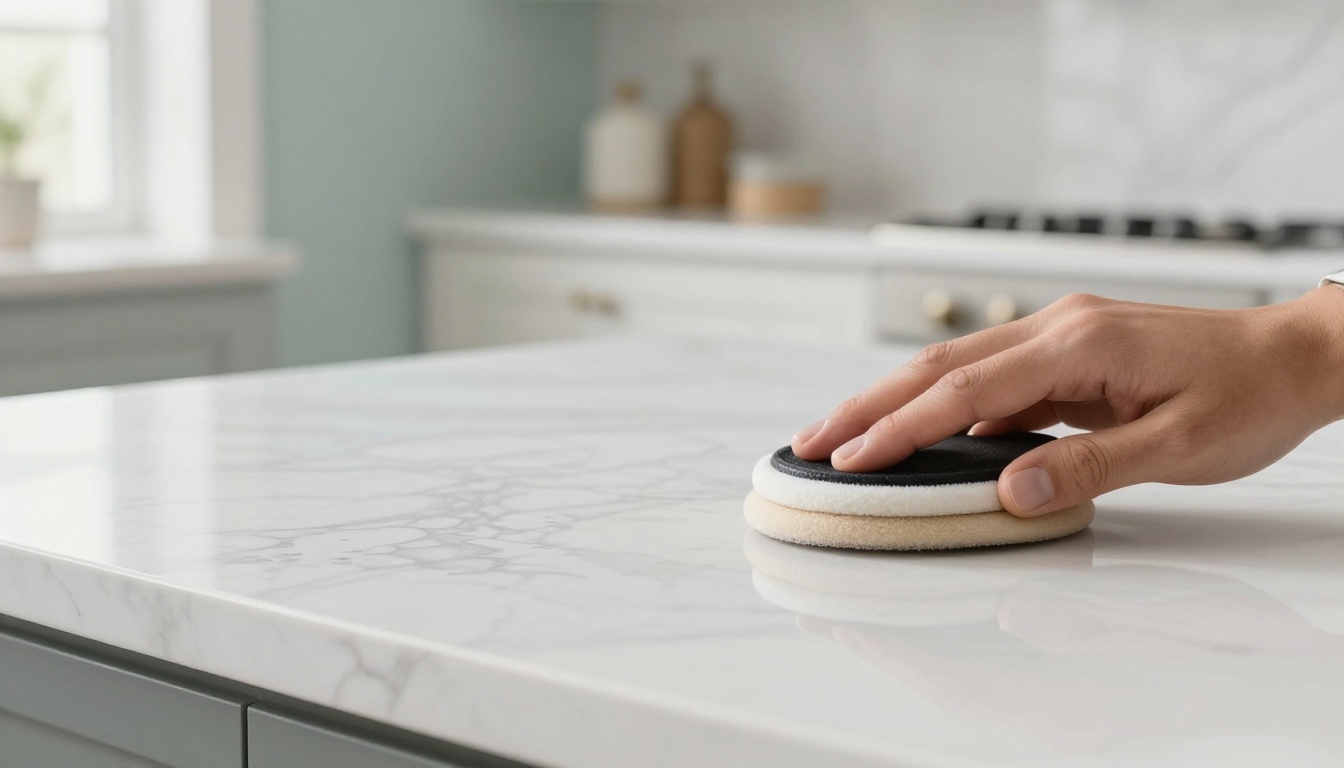
If your marble is high-polish and your kitchen has strong lighting, blending is the hard part — and it’s why professional refinishing often looks dramatically better than spot fixes.
How pros remove etch marks (the process that actually works)
Etching changes the top layer of the stone, so the reliable fix is to refinish the surface:
-
Honing to level the etched area (removing a very small amount of stone)
-
Polishing to restore clarity and shine
-
Blending so the repaired area matches the surrounding finish in normal light
When etching is deep or spread across multiple areas, the best-looking result often comes from blending a wider section so the countertop looks uniform again — not “repaired.”
This is exactly what Marble Restoration & Repair covers.
DIY vs. pro: quick decision guide
| Situation | DIY might be okay | Call a pro |
|---|---|---|
| One small, light dull spot | If you have the right marble polish and patience | If it’s a high-gloss surface that shows everything |
| Etch rings in multiple places | Risk of uneven sheen | Yes — blending is the hard part |
| You feel a dip or rough crater | No — likely too deep | Yes — honing is usually needed |
| Dark stain plus dullness | Maybe for surface cleaning only | Yes — stain + polish may both be needed |
| Near sink cutouts or edges | Easy to overwork edges | Yes — edges can be damaged if handled wrong |
Preventing future dull spots without babying your kitchen
You don’t have to treat marble like fragile glass. A few habits go a long way:
-
Wipe acidic spills quickly (especially citrus and wine)
-
Use cutting boards and coasters in your high-use zones
-
Stick with pH-neutral cleaners and skip vinegar sprays
-
Ask what finish you have (high polish shows etches more than honed)
Conclusion
Those cloudy rings and dull patches aren’t “wear,” they’re chemical etch marks that change the marble’s surface. With the right approach, marble etch removal in Martinez is usually a honing-and-polishing job that restores shine and blends the finish naturally.
If your countertop has deep etches, widespread dulling, or a mix of stains and surface damage, an in-home assessment is the fastest way to get a real repair plan and avoid making it worse with trial-and-error products.
Get pricing and next steps here: Get a Quote
TL;DR / Key Takeaways
-
Cloudy, dull, lighter-looking spots on marble are usually etching, not dirt
-
Etching is caused by acids like lemon/citrus, vinegar, wine, soda, tomato sauce, and some cleaners
-
Etches = surface damage (changed finish); stains = discoloration (absorbed into pores)
-
Sealer helps with stains but does not prevent etching
-
The reliable fix is honing + polishing + blending (spot fixes often look patchy)
-
If buildup is part of the problem, start with Countertop Cleaning
-
For true etch repair and finish restoration, use Marble Restoration & Repair
-
Ready for pricing? Get a Quote